 From professionals for professionals
 Satisfied customers

Anyone interested in nail design quickly faces the question: Which artificial fingernails are actually the best?
The selection is vast – from classic gel nails to acrylic and modern hybrid systems. Each method has its own advantages and is suitable for different needs, nail types, and experience levels.
In this article, we'll show you the most important differences and help you find the best solution for your requirements.

The most important types at a glance
Artificial fingernails can be roughly divided into three main systems: Gel, Acrylic, and Acryl-Gel (Hybrid). Additionally, there are simpler options like Press-On Nails or UV polishes, which are more commonly used in the DIY sector.
Gel nails – the all-rounder
Gel nails are among the most popular methods and are widely used both in salons and for home use.
They are applied in several layers and cured under a UV or LED lamp. The result is a flexible, natural, and shiny sculpting that adapts well to the natural nail.
A major advantage of gel nails is their versatility. They are suitable for both natural nail strengthening and extensions and can be combined with various techniques – from classic French to modern designs.
The application is also relatively pleasant, as the material is low-odor and easy to control.
👉 Especially suitable for:
- natural looks
- beginners and advanced users
- flexible, light modellings

Acrylic nails – maximum stability
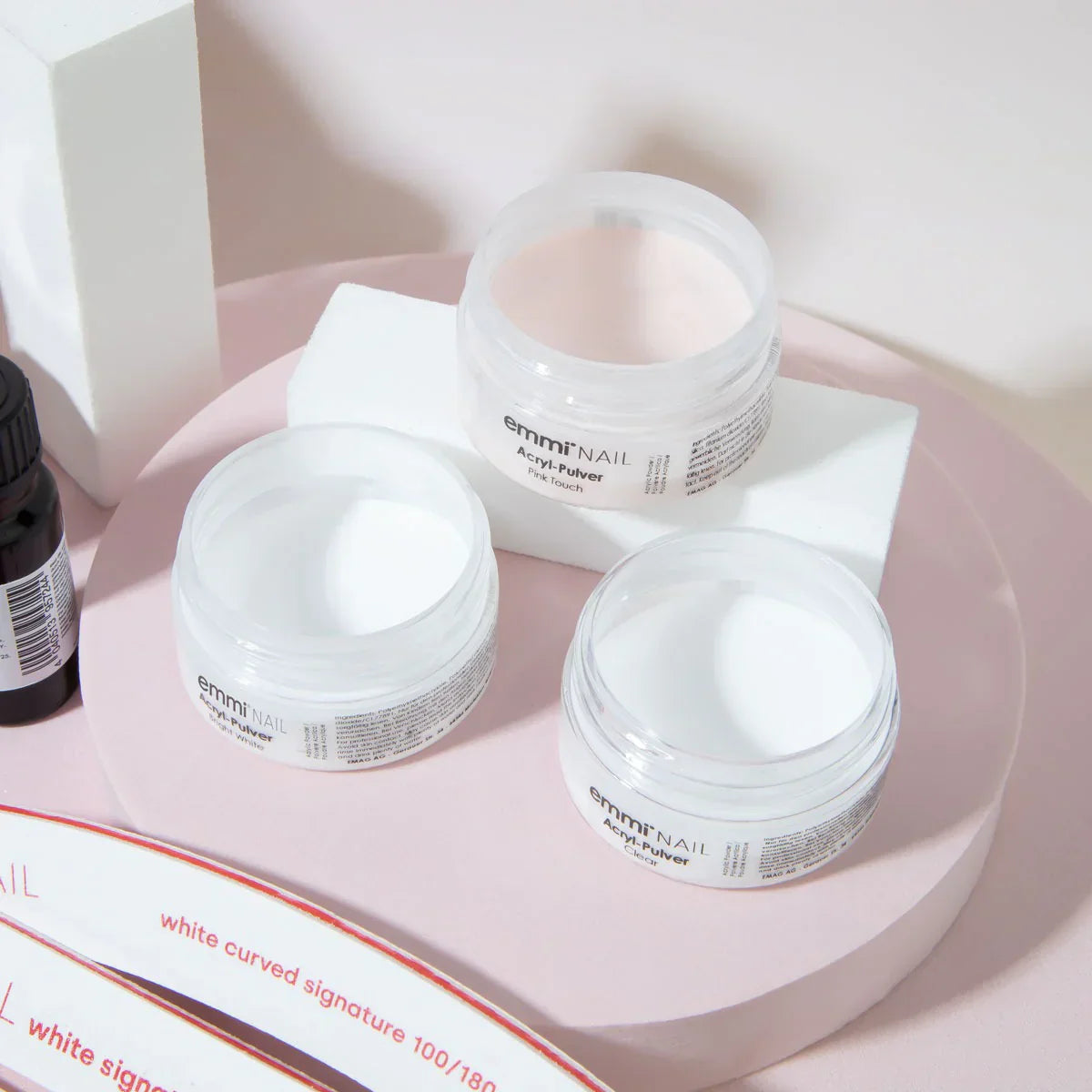
Acrylic is known for its extreme hardness and stability. The material is created by mixing powder and liquid and cures in the air – without a lamp.
Acrylic nails are particularly robust and are excellent for long or heavily used nails. However, they are less flexible than gel and can therefore feel somewhat "harder."
The application also requires more experience, as the material reacts faster and has a stronger odor.
👉 Especially suitable for:
- very long nails
- heavy wear
- experienced users

Acryl-Gel (Hybrid) – the best of both worlds
Acryl-gels combine the advantages of gel and acrylic. They are stable like acrylic, but more flexible and easier to work with.
The material remains sculptable until it is cured in the lamp – this gives you significantly more control when working. At the same time, the high strength ensures long-lasting results.
👉 Especially suitable for:
- precise work
- stable, but flexible nails
- salon applications

Further alternatives
In addition to the classic systems, there are also simpler options, which are primarily intended for quick applications.
Press-On Nails are ready-to-stick nails and are well-suited for short-term looks, but usually only last a few days.
UV polishes (Shellac) offer light reinforcement and shine, but do not replace a full nail enhancement.
Which artificial nails are the best now?
The answer is simple – and at the same time individual:
👉 The best artificial nails are those that suit your nail type, your daily routine, and your expectations.
If you value naturalness and flexibility, gel nails are usually the best choice.
If you need maximum stability, acrylic can be beneficial.
And if you want to combine both, acryl-gels offer a very good solution.
Our tip
In practice, gel nails have established themselves as the best all-rounder. They offer an ideal balance of durability, flexibility, and a natural look – for beginners and professionals alike.
With high-quality gels and the right technique, results can be achieved that last several weeks and look well-maintained and natural.
Conclusion
Which artificial fingernails are the best strongly depends on your individual requirements. While acrylic offers maximum stability and hybrid systems allow for a lot of control, gel nails impress with their versatility and natural results.
👉 For most applications, they are therefore the best choice – especially if you value comfort, appearance, and easy application.
👉 Discover our professional gels and systems for perfect nail modeling now.