 From professionals for professionals
 Satisfied customers

What does sterilization actually mean?
Sterilization is the highest standard in hygiene. It involves the complete removal of all viable microorganisms – that is:
- Bacteria
- Viruses
- Fungi
- Spores
👉 In contrast to disinfection, which only reduces a portion of germs.
Especially for instruments that are used multiple times or come into contact with skin and blood, sterilization is crucial for safety.

Why is steam sterilization so effective?
Autoclaves work with moist heat (steam) under pressure.
👉 Typical values:
- 121 °C at approx. 2 bar
- or 134 °C at approx. 3 bar
The advantage: Steam penetrates deep into materials and destroys microorganisms by denaturing proteins.
➡️ This reliably kills even resistant spores.
Autoclave Procedure
The sterilization process step by step
The process in a modern autoclave is standardized:
1. Preparation
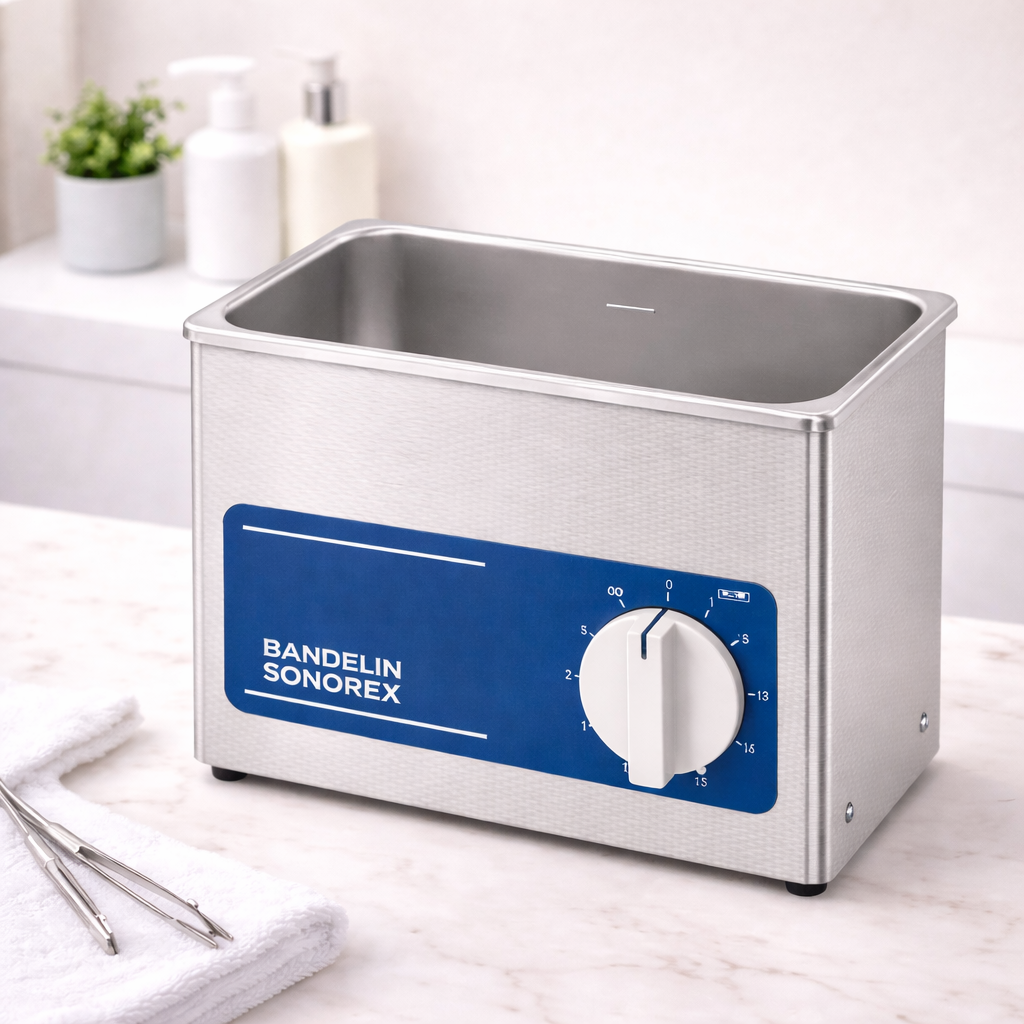
- Clean instruments (e.g., ultrasonic bath)
- Dry
- Package in sterile bags (with indicator)
2. Vacuum phase
- Air is removed from the device
- Prevents air bubbles → important for complete sterilization
👉 especially crucial for Class B autoclaves with pre-vacuum
3. Sterilization phase
- Saturated steam flows in
- Temperature rises to over 120 °C
- Holding time begins (e.g., 15–20 minutes)
4. Cooling & Drying
- Pressure is released
- Instruments are dried
- Remain sterile and can be stored in packaging
👉 Result:
➡️ germ-free, safe instruments for the next use
Legal Information & Official Bodies
Where can you get binding information?
👉 Always check here:
Health authorities (most important body)
- regionally decide on requirements
- inspect studios
👉 Simply search: "Health authority + city"
Examples:
- Stuttgart Health Authority
- Munich Health Authority
- Berlin Health Authority
Official Sources
- RKI (Robert Koch Institute)
- BfArM (Federal Institute for Drugs and Medical Devices)
- State Hygiene Ordinances
Important practical note
- Regulations are not uniform nationwide
- are getting stricter
- The trend is clearly towards:
👉 Sterilization instead of just disinfection
Example Development
👉 In NRW:
- Mandatory for Class B autoclaves for invasive activities from 2025
👉 affects:
- Foot care
- Podiatry
- Cosmetics
- Tattoo
SciCan Autoclave Comparison

Classification
Statim Series
👉 Advantage:
- Extremely fast
- Ideal for small batches
- Perfect for studios
👉 Disadvantage:
- Lower volume

Bravo Series
👉 Advantage:
- Classic autoclaves
- Larger quantities
- Versatile
👉 ideal for:
- Foot care
- Podiatry
- Larger studios

Brief Buying Guide
Which autoclave is right for you?
Small nail salon
➡️ Statim 2000 / 2000 G4
Growing studio
➡️ Statim 5000 / Bravo 17L
Foot care / podiatry
➡️ Bravo 22L or 28L
High throughput
➡️ Bravo 28L
Conclusion
An autoclave is today:
👉 Hygiene standard
👉 Safety factor
👉 Competitive advantage
And increasingly:
👉 Mandatory or future standard

Manufacturer: SciCan – Quality & Innovation in Sterilization
Who is SciCan?
SciCan is an internationally established manufacturer in the field of infection control and sterilization technology. The company was founded in the 1950s in Canada and has since developed into one of the leading providers of autoclaves and hygiene solutions.
Today, SciCan products are used worldwide in medical, dental, and cosmetic facilities.
Global Experience & Specialization
SciCan specializes in solutions for:
- Instrument reprocessing
- Sterilization and disinfection
- Complete hygiene concepts for practices and studios
The devices are used in over 100 countries worldwide and are particularly established in areas such as dentistry, podiatry, and cosmetics.
Technological Innovations
SciCan is one of the companies that have significantly shaped modern sterilization.
👉 Important developments:
-
STATIM Cassette System
→ particularly fast sterilization cycles -
Bravo Autoclaves
→ larger capacity with pre- and post-vacuum -
G4 Technology
→ digital documentation & networking
The well-known STATIM system is still considered one of the fastest autoclave systems worldwide and is used in many practices for quick instrument turnaround.
Different systems for different requirements
SciCan offers two fundamental autoclave concepts:
STATIM Series (Cassette Autoclave)
- Very fast cycles
- Compact
- Ideal for smaller quantities
- Perfect for studios
BRAVO Series (Chamber Autoclave)
- Larger capacity
- Pre- and post-vacuum
- Better penetration of packaged instruments
- Suitable for higher requirements
👉 These systems use modern vacuum technology to optimally distribute steam and ensure reliable drying.
Focus on Safety & Compliance
A key claim of SciCan is to develop devices that:
- comply with current European standards
- provide reproducible sterilization processes
- enable secure documentation
👉 Especially with regard to stricter hygiene regulations, this is a decisive factor for studios and practices.
Why SciCan?
👉 SciCan stands for:
- Decades of experience
- High reliability
- Innovative technology
- Globally proven systems
➡️ For you, this means:
maximum safety, professional standards, and trust with your customers